
A November and December pruning guide for Southwest Washington gardens.
Written by Destiny McLaren.
Once the leaves begin to fall, it is tempting to give the whole yard a haircut. Bare branches make overgrowth easier to see, and a tidy garden can feel like one more job checked off the list.
But different plants need different timing. Some are already carrying next year’s flower buds. Others hold the canes that will produce next summer’s berries. A little identification now can save a lot of disappointment later.
In Southwest Washington, November and December are useful months for selective cleanup and planning. The goal is to prepare plants for winter while protecting the growth you will want next season.
Begin with a purpose
Before cutting, ask what you want to accomplish. Are you removing a broken branch, reducing wind damage, improving fruit production, or simply trying to make a plant smaller? A specific goal makes it easier to decide whether the job needs doing now.
Small, clearly dead or broken branches within safe reach can usually be addressed without waiting for the main pruning season. Substantial reshaping of healthy woody plants deserves a plan. Late winter, after the worst cold has passed, is generally a better time than fall. [1]
A leafless branch is not necessarily dead. If you cannot tell, leave it for identification. Large, unstable limbs near power lines need qualified help; contact the utility for branches near its wires. They are usually happy to help and appreciate knowing where overgrowth is before a major storm takes out the whole block! [2]
Know where the cut belongs
Use the clean, sharp tools covered in our companion tool-care article. Choose a tool that can make the cut without twisting or crushing the stem, and follow disease-specific cleaning guidance when a plant appears infected.
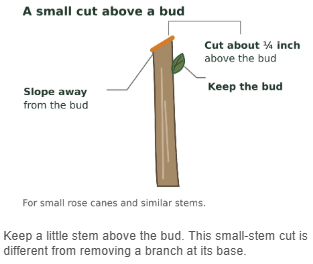
For a small rose cane or similar stem, cut about ¼ inch above a suitable bud, sloping away from it. Avoid cutting into the bud or leaving a long bare stub. On roses, an outward-facing bud helps direct new growth away from the center. [2,3]
When removing an entire woody branch, make the cut just outside the branch collar, the slightly swollen area where it joins a larger branch or trunk. Preserve that tissue and avoid a flush cut against the trunk. [2]
Give the right roses a light fall trim
Tall hybrid tea, floribunda, and grandiflora roses may benefit from modest shortening to reduce winter wind damage. Take several inches off long canes where needed, rather than treating this as the main annual pruning. [3]
Save the substantial pruning for late winter or early spring. OSU recommends mid-February to early March for established roses in the nearby Willamette Valley, when the weather is suitable. Take forecast hard freezes and your own garden’s conditions into account. [3]
Climbers and ramblers need a different plan. Preserve their framework and check supports instead of giving every rose the same haircut. Other shrub and specialty roses also have their own requirements. Identify the type before making substantial cuts. [3]
Keep the raspberry canes that matter
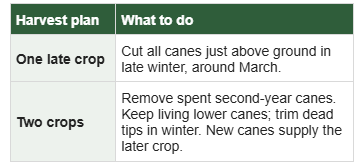
For summer-bearing red or yellow raspberries, remove the spent canes that fruited this summer at ground level. Keep the healthy new canes; they carry next summer’s crop. Old fruiting side shoots help distinguish spent canes. [4]
This comparison applies to summer-bearing red and yellow raspberries. Fall-bearing plants need a different plan.
For fall-bearing or everbearing raspberries, choose the harvest system before pruning. A dead tip does not mean the whole cane should go: its living lower portion can still provide an early summer crop. [4]
Black and purple raspberries need additional pruning steps. If the type is unknown, identify it before cutting the patch down. [4] A note about when it fruited this year is worth keeping with your garden records.
Plan ahead for apple pruning
Targeted sucker removal or limited trimming to address hazardous or interfering growth may be appropriate in fall, but save routine structural pruning of apple trees for late winter, before bud break and after the coldest weather has passed. In the broader Pacific Northwest, late January into February is often the working window. Choose a dry spell when possible and adjust to conditions at your site. [5,6]
Use November and December to study the tree. Photograph it from several sides and note crowded branches, rubbing limbs, and growth that shades the center. Check the variety if known: tip-bearing and spur-bearing apples need different attention to preserve fruiting wood. [5]
Clean up diseased fallen leaves and remove mummified fruit as part of orchard sanitation. [7] This is useful work even when the pruning saw stays in the shed.
Do not apply the apple schedule to every fruit tree. Cherries, plums, and other crops need guidance suited to their species and local disease risks. An overgrown tree also needs a restoration plan, rather than a single drastic haircut.
Protect next spring’s flower buds
Lilacs, forsythias, rhododendrons, and many other spring bloomers have already formed buds for their next flower display. A hard fall trim can remove the flowers along with the branches. For routine shaping that preserves blooms, wait until after flowering. [1]
Look closely before reaching for the shears. On a rhododendron, those prominent buds at branch tips are worth protecting. If you do not know the plant, photograph its leaves, stems, and buds and identify it before deciding when to prune. [1]
Identify the hydrangea before cutting
Hydrangeas are a good example of why one rule cannot fit an entire plant group. Bigleaf and oakleaf hydrangeas generally flower on older wood. Cutting those stems back hard can remove next season’s display. [8]
Panicle and smooth hydrangeas flower on the current season’s growth. Their routine pruning can be done during dormancy; late winter or very early spring is a practical time to reassess them. [1,8]
Some cultivars have more than one flowering habit, so keep the plant tag or cultivar name if you have it. When the type is uncertain, leave substantial pruning until you can identify the plant. Faded flower heads alone are not a reason to cut every stem down.
Leave useful winter structure
Healthy perennial stems and seed heads can provide winter interest, food for birds, and shelter for insects. There is often no need to flatten an entire bed after the first frost. Coneflower seed heads and standing grasses can keep doing useful work after their summer display is over. [9]
Many deciduous ornamental grasses can stand through winter and be cut back before new spring growth gets in the way. [7] Evergreen grasses and sedges need different treatment; many only need dead material combed out or removed individually. Identify yours before giving it a close cut. [10]
Remove foliage with significant disease or pest problems, and clear material that smothers smaller plants or blocks access. Most home compost piles do not reliably destroy plant pathogens or pests, so follow disposal guidance for the problem. [9]
Make a useful winter work list
A good fall session might mean removing a few damaged twigs, checking supports, clearing diseased debris, and noting the plants that need attention later. You do not have to finish every pruning job before the year ends.
Record the plant name, the problem, and the next suitable season. A photo taken now can help you recognize the same branch or cane when it is time to act. The quick-reference table on the next page can help organize that list.
Ask before you cut
The WSU Extension Clark County Master Gardener Answer Clinic can help with plant identification and gardening questions. Email AskaMasterGardener@clarkmg.org or call 564-397-5711.
Include clear photos and a description of what you want to accomplish. For an in-person visit, check current hours and call ahead to confirm staffing. [11]
For more resources, visit Urban Abundance at urbanabundance.org.
Sources and further reading
1. WSU Extension: Pruning Woody Landscape Plants
2. University of Minnesota Extension: Pruning trees and shrubs
3. OSU Extension: Pruning roses
4. OSU Extension: Growing Raspberries in Your Home Garden
5. OSU Extension: Prune apple trees in late winter for stronger growth and better fruit
6. OSU Small Farms: Time to Prune
7. OSU Extension: November garden calendar
8. WSU Hortsense: Hydrangea failure to bloom
9. Iowa State University Extension: Managing Fallen Leaves and Fall Cleanup
10. Royal Horticultural Society: Ornamental grasses cutting back
11. WSU Extension Clark County: Community Education and Answer Clinic